I am getting ready to see the wild horses when there is a knock on the door. Our host, Gema, has made us a Spanish omelette and she is delivering it still nice and warm. She will be back a 10 a.m. to take us to see the horses.
Ana rallies, despite being sore and tired. We enjoy the omelette which is like a pie made of potatoes and eggs. I have never had one before and like it as much as scrambled eggs. I like the taste of potatoes in the morning.
Gema comes and we drive in her car up the mountain road a mile or so, where she pulls off into a flat spot in a field. We cross the country road and follow a trail into open pasture land. Gema says the horses will be somewhere in the valley below. We walk a ways looking for them. It is a beautiful day and Ana is enjoying the conversation with Gema in Spanish as we go along. Gema is a horse woman. Though from Madrid, she has married a local fellow and is very much at home deep in this mountainous countryside. Gema has created a marketing point for her rentals by offering this excursion to see the horses. “I have many wild horses,” she says in English, without noting the irony.
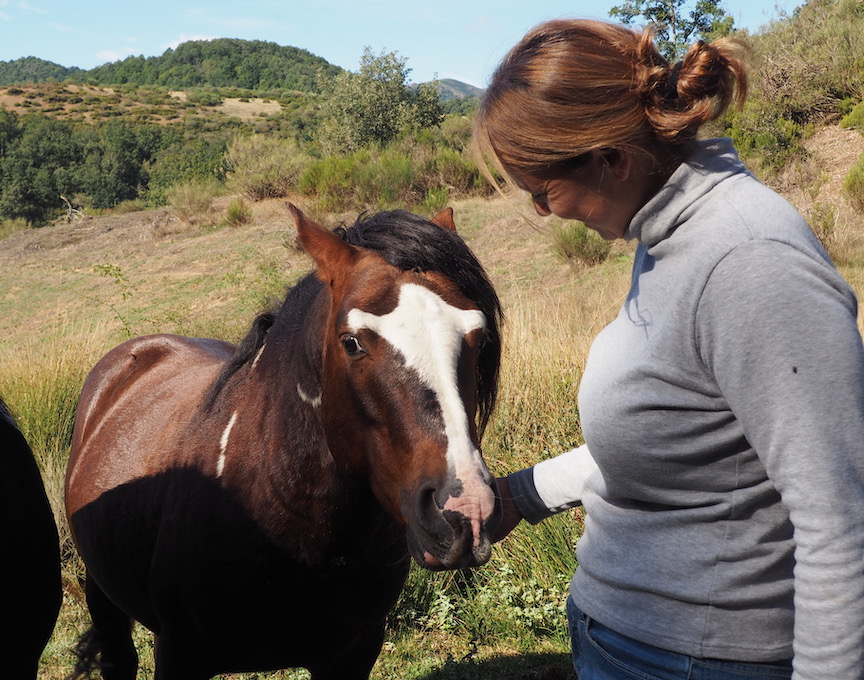
Gema used to breed these large ponies and sell them to schools and others, but she has had a change of heart. Now the horses have been left to be wild and she visits them daily with food and to see how they are. She feeds them but does not touch them any more. The know her call a high chirping sound and a whistle and come when she calls. We are looking down a slope that is open pasture land. We can see sheep and and large Spanish mastiff dogs, tending them. There are a few goats and Gema sees two of her horses below, but it is hard for us to pick them out.
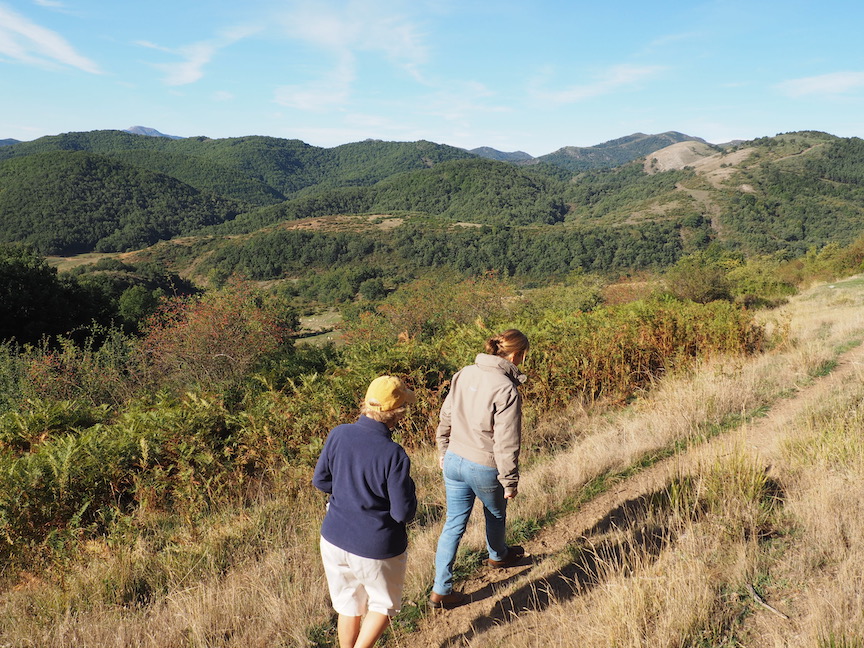
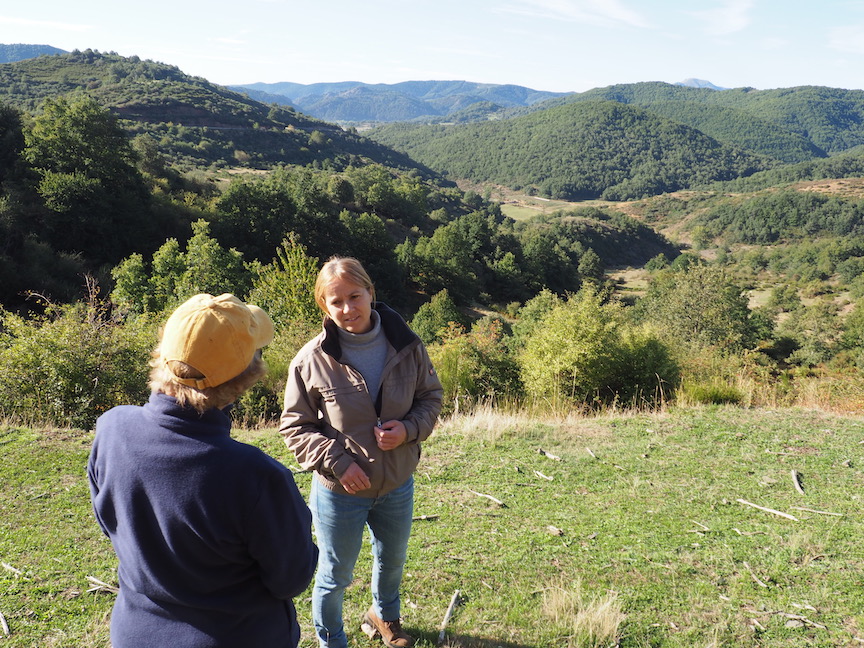
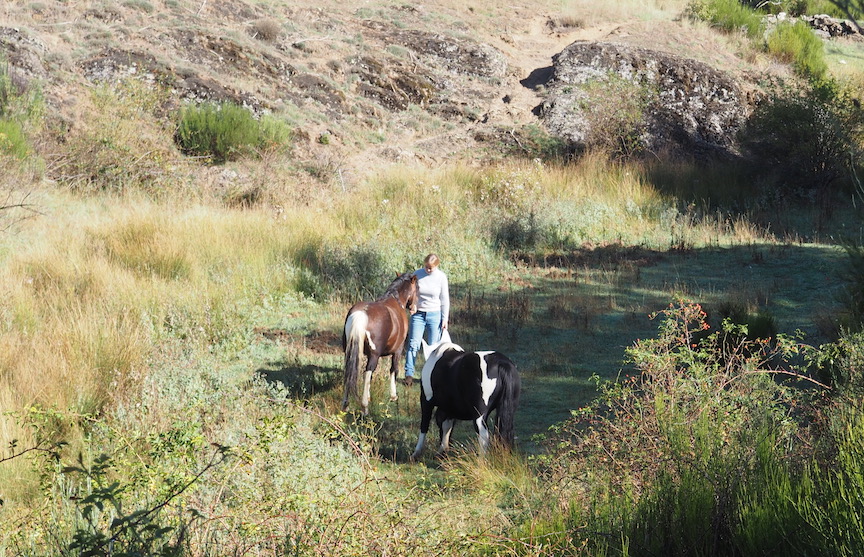
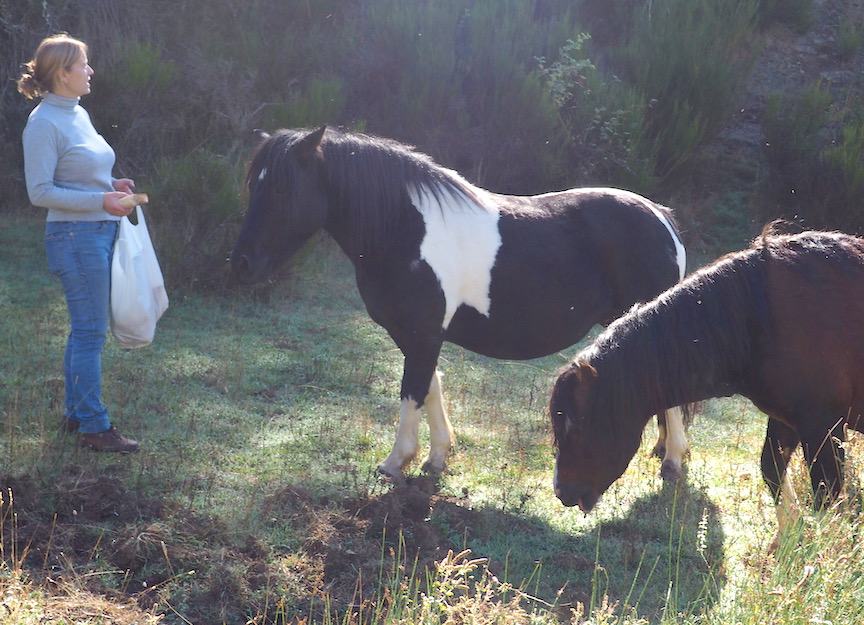
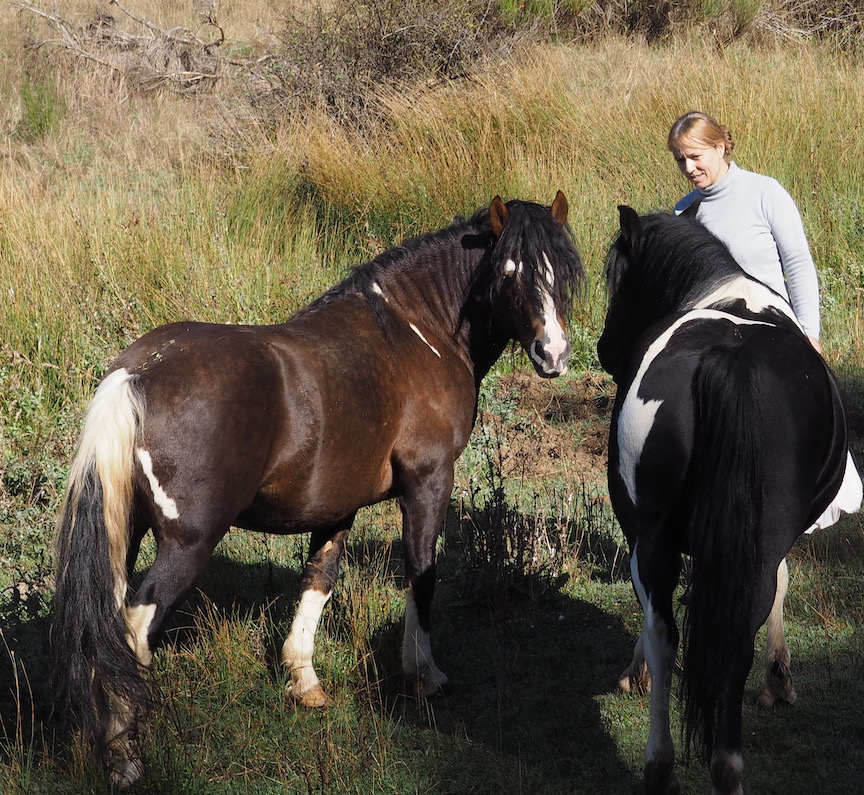
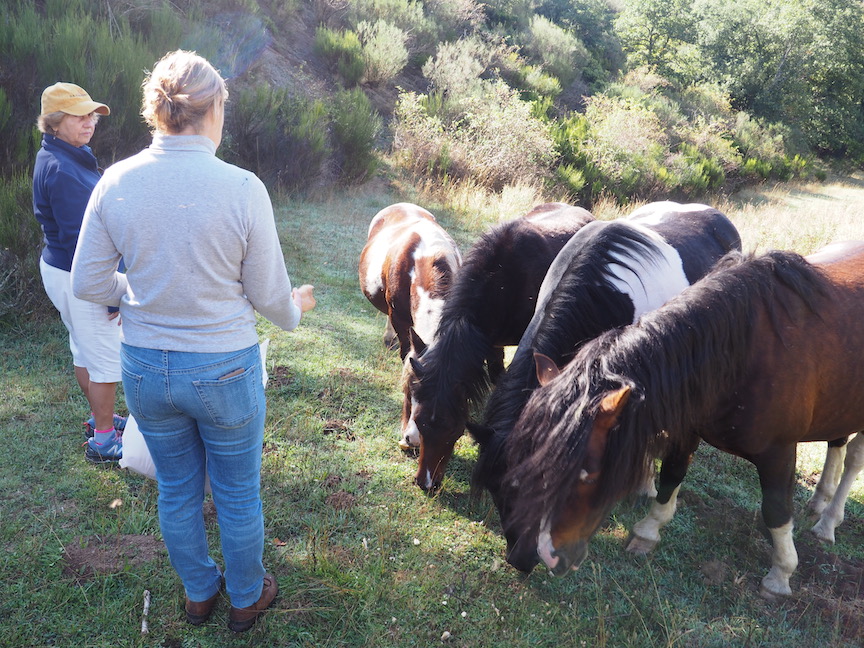
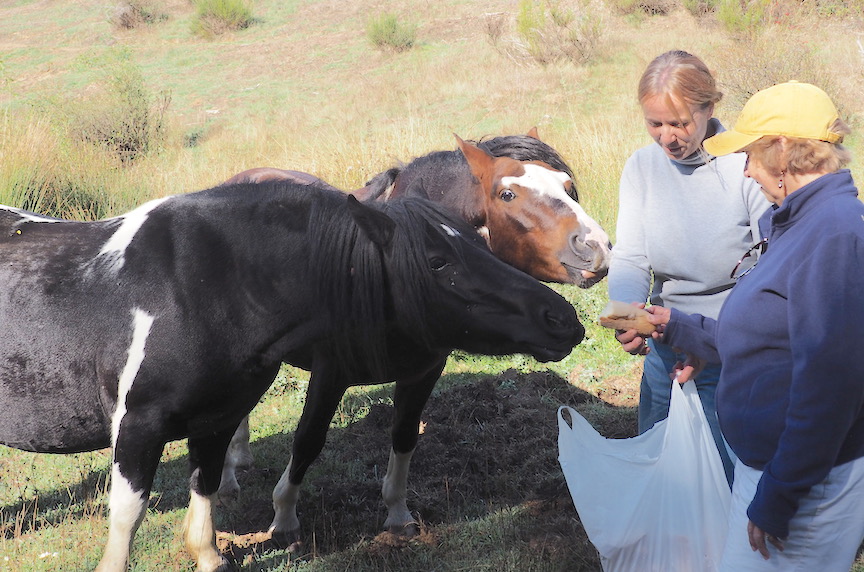
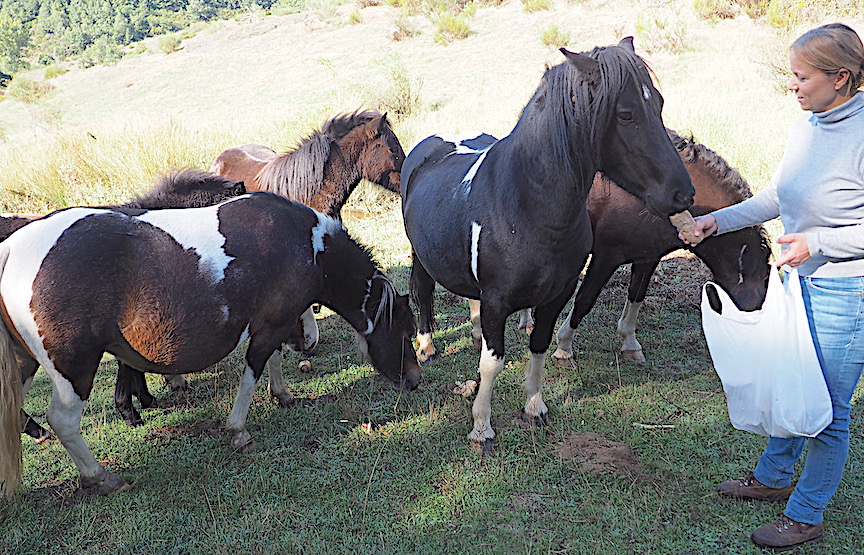
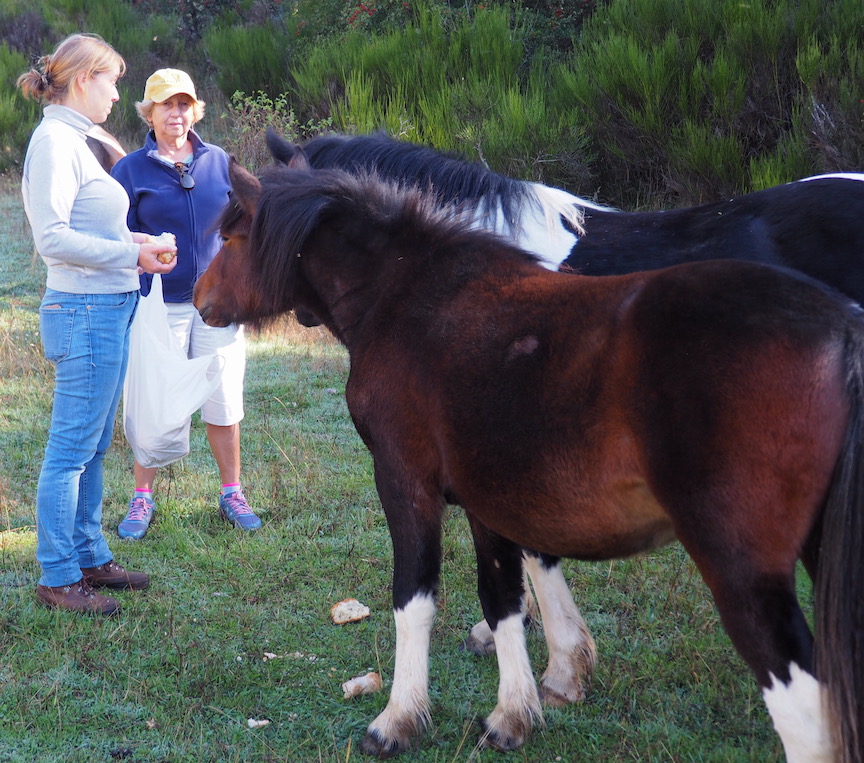
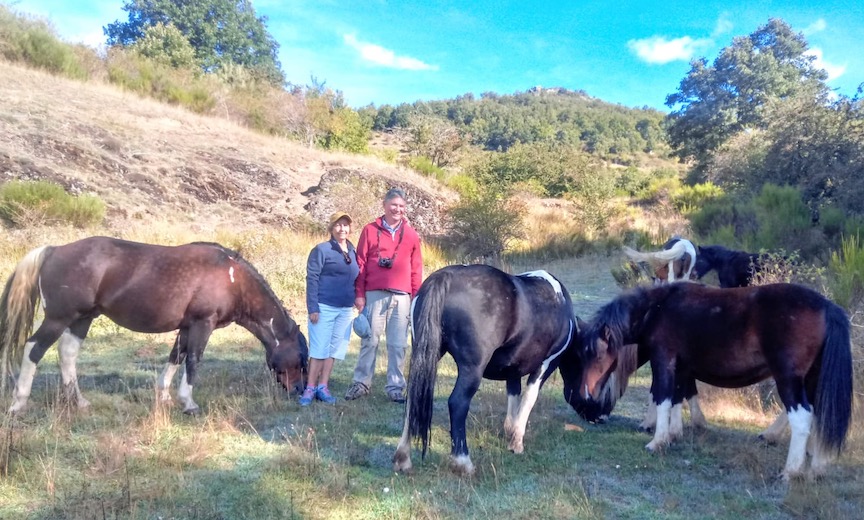
We must walk awhile before she can find them. She tells us to wait in a field and then disappears into the a row of brush and trees up hill. We can here here calling. After awhile she comes through brush with two of them. They are pretty, multi-colored, there head about 5 feet high and very sturdy. They are bigger than most ponies but not quite the size of a big horse. Gema is feeding them stale bread and they are following her as a result. We walk up toward her, and as we do, other members of the herd appear. Soon six or so are swirling around her in a non-aggressive manner. Ana is comfortable among them, feeding them too, as I shoot photos.
After awhile, Gema leads us down to a dirt road, where she will leave us to wait and then hikes a good distance back up hill to her car. She pick us up and takes us to our apartment. She has made us a reservation for two o’clock to ride a boat on a mountain reservoir, leaving from the town of Riano. Our next adventure. We arrive early and pay for our boat ride. There are high-schoolers standing around and being quite noisy. They will apparently join us on the boat.
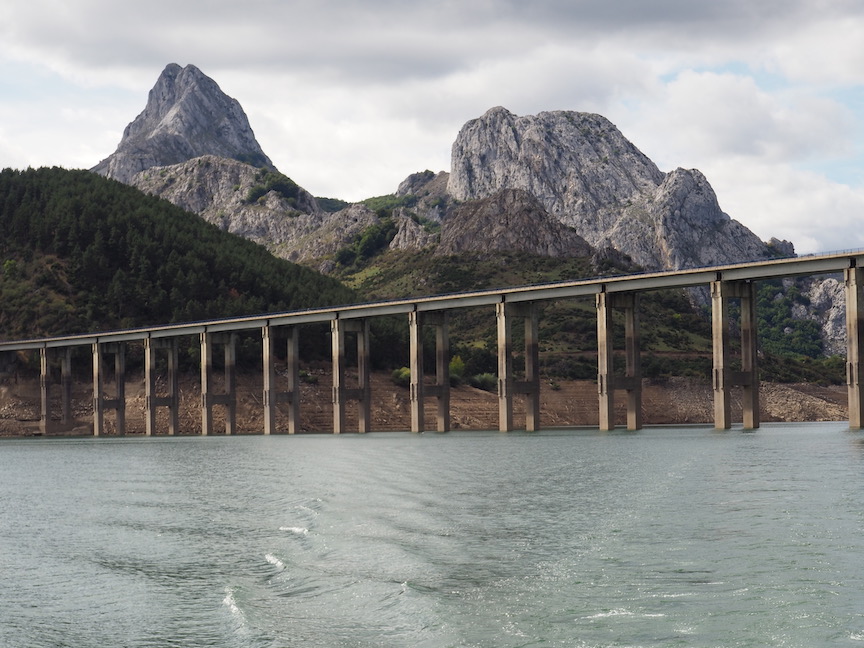
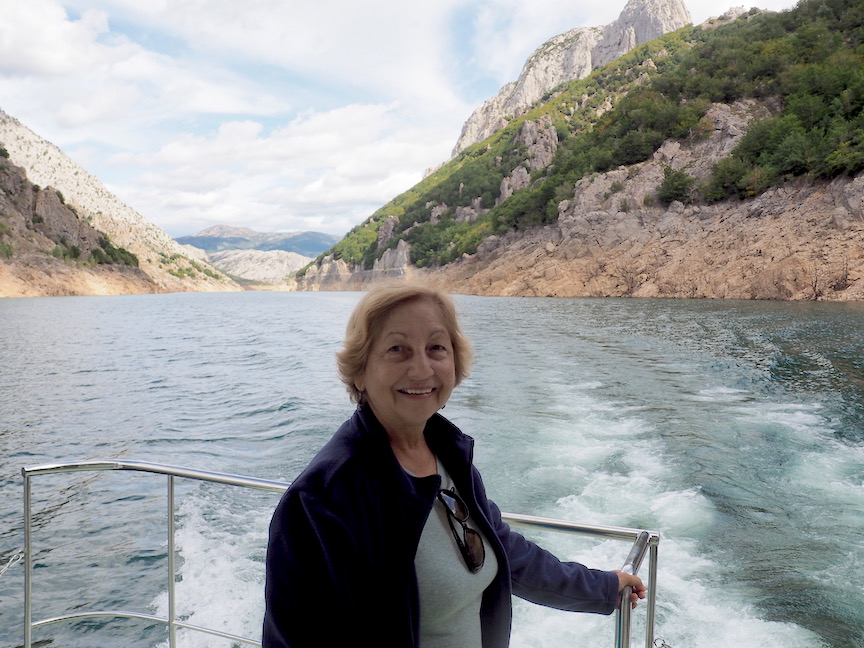
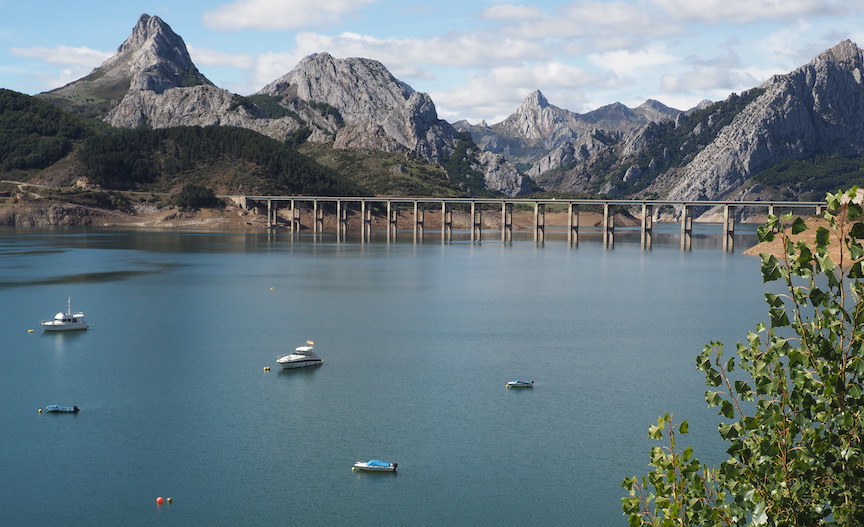
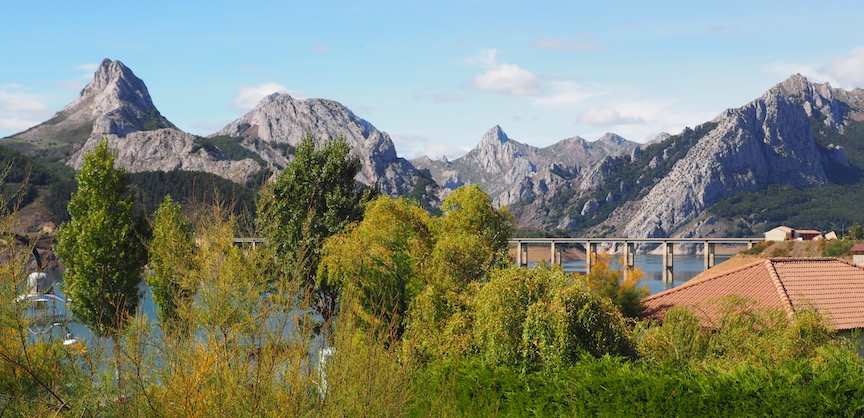
We buy our tickets; then we go outside to wait in the sunshine and look at the mountain scenery. The ticket lady approaches Ana and says they have booked a school group that will fill our boat. We will probably be unhappy with this. She gives us our money back and says we can go now if we want or come back at 6 p.m. for the next boat. We can’t, as we have planned to go to Leon. So we will go with the kids. We are allowed to board first and pick seats up front, but it will not matter as a large crowd of kids will fill about every seat on the large craft. The lake we will travel is large. It was created to provide a reservoir and to do so the original town of Riano was submerged. Above the lake is a 30-year-old-town, everything it probably built at the same time in the 1970s. Below the waters, the ancient village. The town was not submerged without protest, but the locals obviously lost out.
The boat leaves the kids are loud and disinterested. The teachers only interested in keeping things under control. No teaching will be done. Forty or so teens laugh and joke and gossip and play with their phones. The video tells about the reservoir project, the protest, the extraordinary geology all around. The kids learn none of this. What a wasted opportunity. We, of course, can not hear the video for the roar inside the cabin, but the photos tell the story in an abbreviated way.
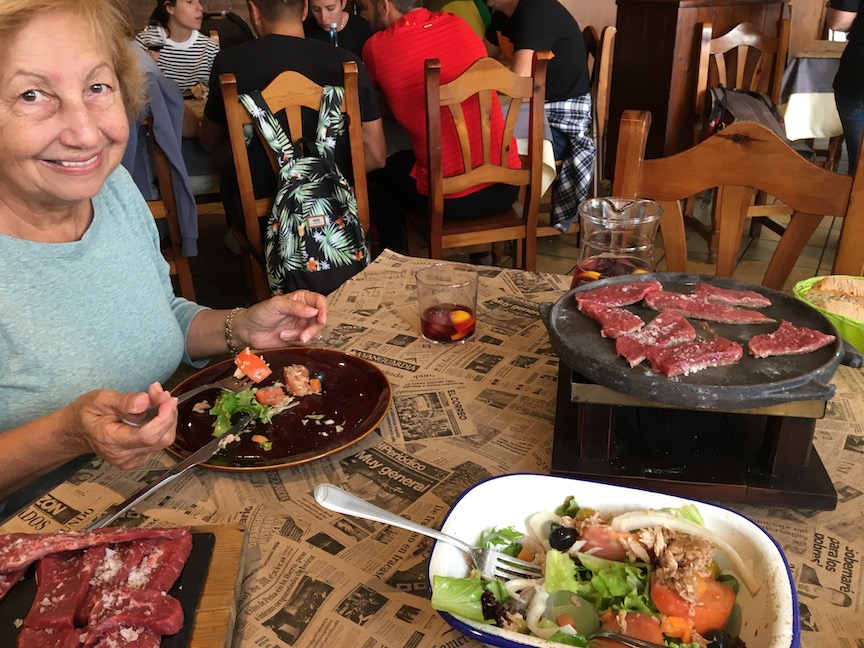
We have lunch in town at a pretty good restaurant. We choose a beef steak dish where they bring a hot plate to the table and you cook sliced steak on it to your liking. It’s a good lunch. The teachers sit at a table next to us, enjoying themselves. The kids have been bussed back to Leon.
After lunch, we drive to Leon going back through Prioro, which means we have crossed over the 4000 foot mountain pass 5 times. We are beginning to feel like we live here. At first the road to Leon twists and turns through the mountains, where nice little villages are. Then things flatten out to farming country, much drier looking. The towns along the road are without charm. They are merely places of agricultural industry. It seems like the farmers all live together in these straight line towns along the road, and then go out the back door to work in the fields, which extend in each direction for miles.
We get into a city garaged without too much trouble about dusk. When we come out, we are in a pleasant city square with a ceramic crafts show going on under dozens of white tents. Bowls and plates and nicknacks of all kinds are being sold. Ana enjoys shopping the event and buys Gema a spoon holder for the apartment that does not have one.
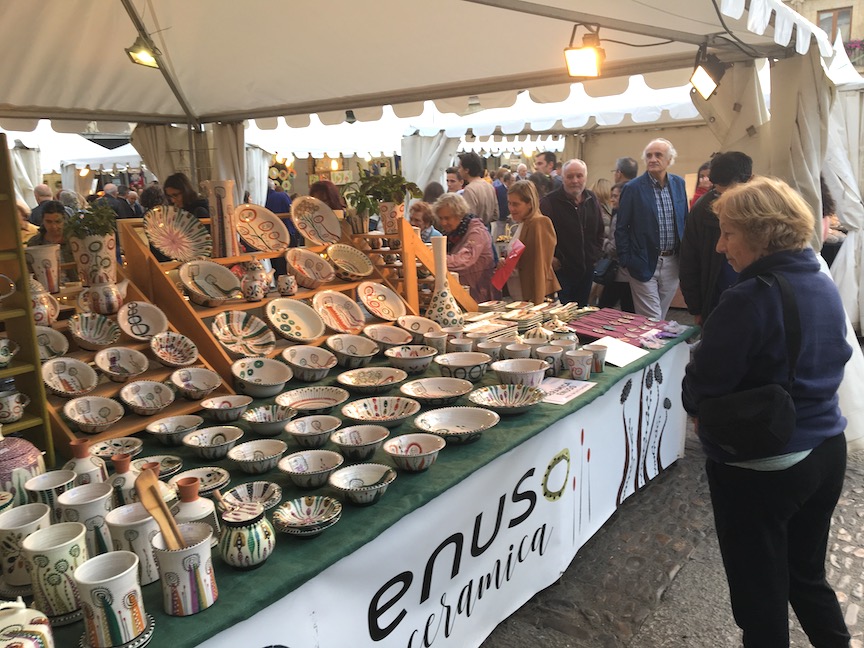
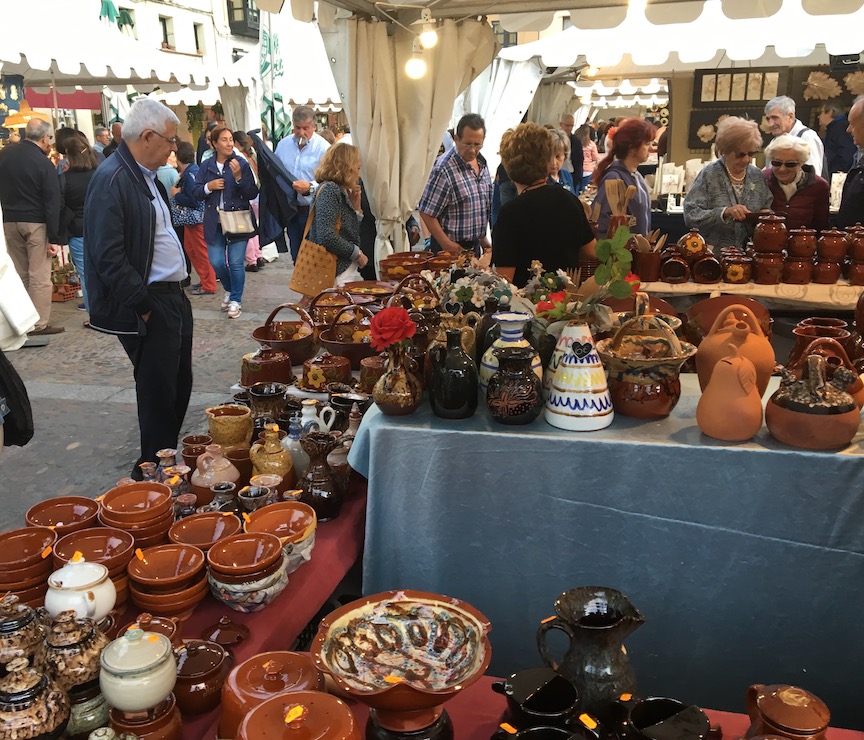
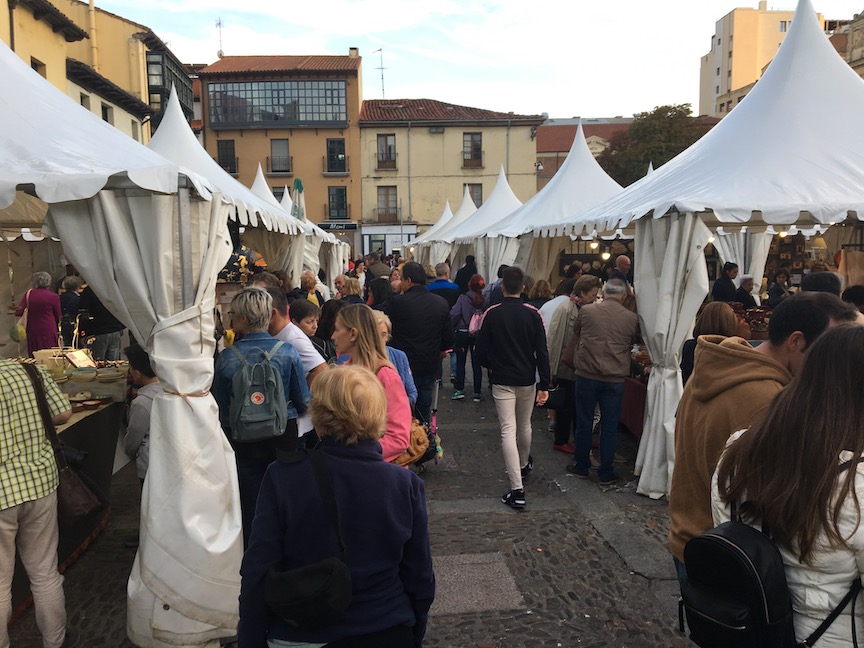
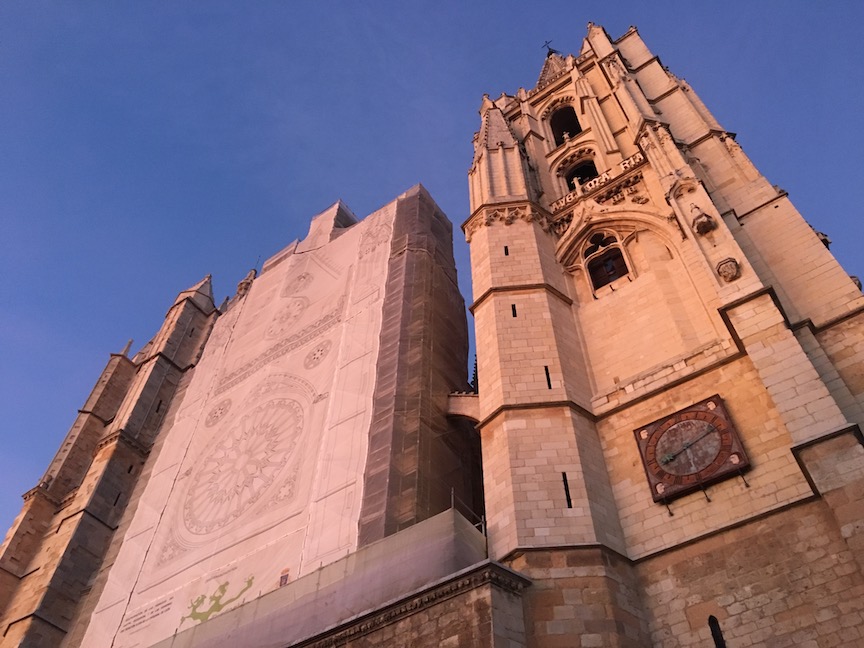
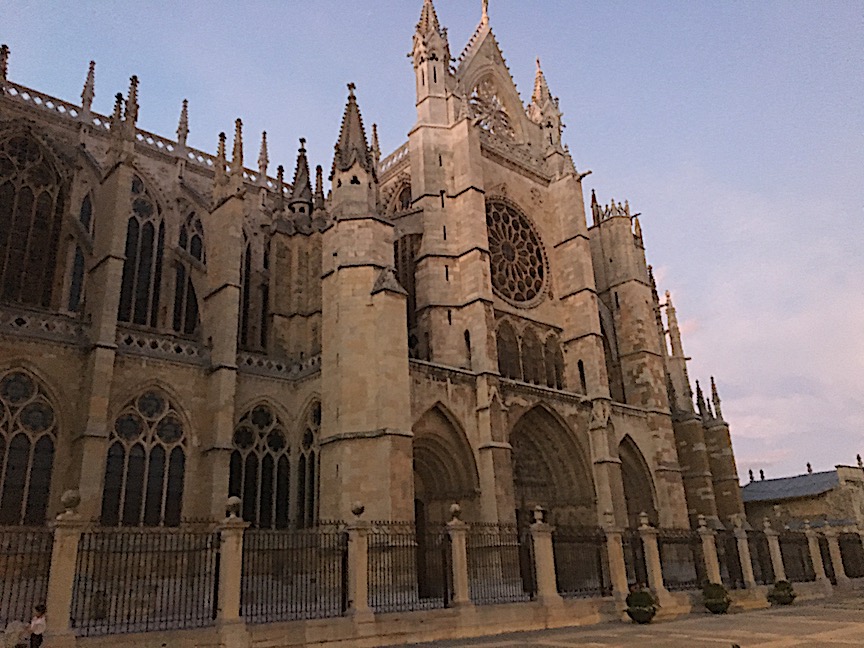
As darkness falls, a protest erupts in the square next to us. Hundreds of people have gathered to protest something. It is orderly and they march through the streets with two bag pipers leading the way. We go in the other direction and find the cathedral which is closed, but lit up on a lovely plaza and we take a few nighttime photos. We have a drink in a local bar and find our way to the car. It will be an hour and a half to Prioro. A long drive after a long day. We will snack on local cheese and sausage that we have bought along the way before going to bed.
 European Trip 2019